

Adolescence
Previously published paragraph censored. Reach out to learn more.

Middle School
The Honors program in schools was never something that had crossed my mind, or anybody in my family in fact. In order to be in this “crew,” your parents had to know somebody, or be educated themselves to know that it existed. Otherwise, by default, students are enrolled in traditional classes. In elementary school, I wanted to be an author. The expression of ideas through words and logic is riveting (in fact, I considered law school my junior year of high school).
During the first couple weeks of 6th grade, my class was given an essay assignment. My english teacher read my essay and deemed that I belonged in Honors courses. After she met with the principal and my mother, they moved me into all available honors courses. I later formally thanked Ms. Varhaaf my senior year of high school (2016) at a Top Scholar Luncheon, which recognized the top 10% of the graduating class.

The idea of becoming a physician became slightly more tangible at this time. I found that the new challenge was finding a way to relate with the honors kids, especially since most of them seemed to come from very stable homes; it was no easy feat. For some time I was called “Swine Flu” because of my Panamanian heritage — it was all I had left of my father, so I didn’t let that get in the way. There were just too many things going on at home to be significantly discouraged, and I felt more anger toward their parents for not teaching cultural competence. Of course, I dealt with this anger by perpetuating it on to students I knew were in a worse situation than me, in order to elevate what confidence I had. Jesus changed this for me.
High School
Three significant events changed the way I viewed medicine as a profession and influenced the community I wanted to serve.
1. Finding my father’s death certificate
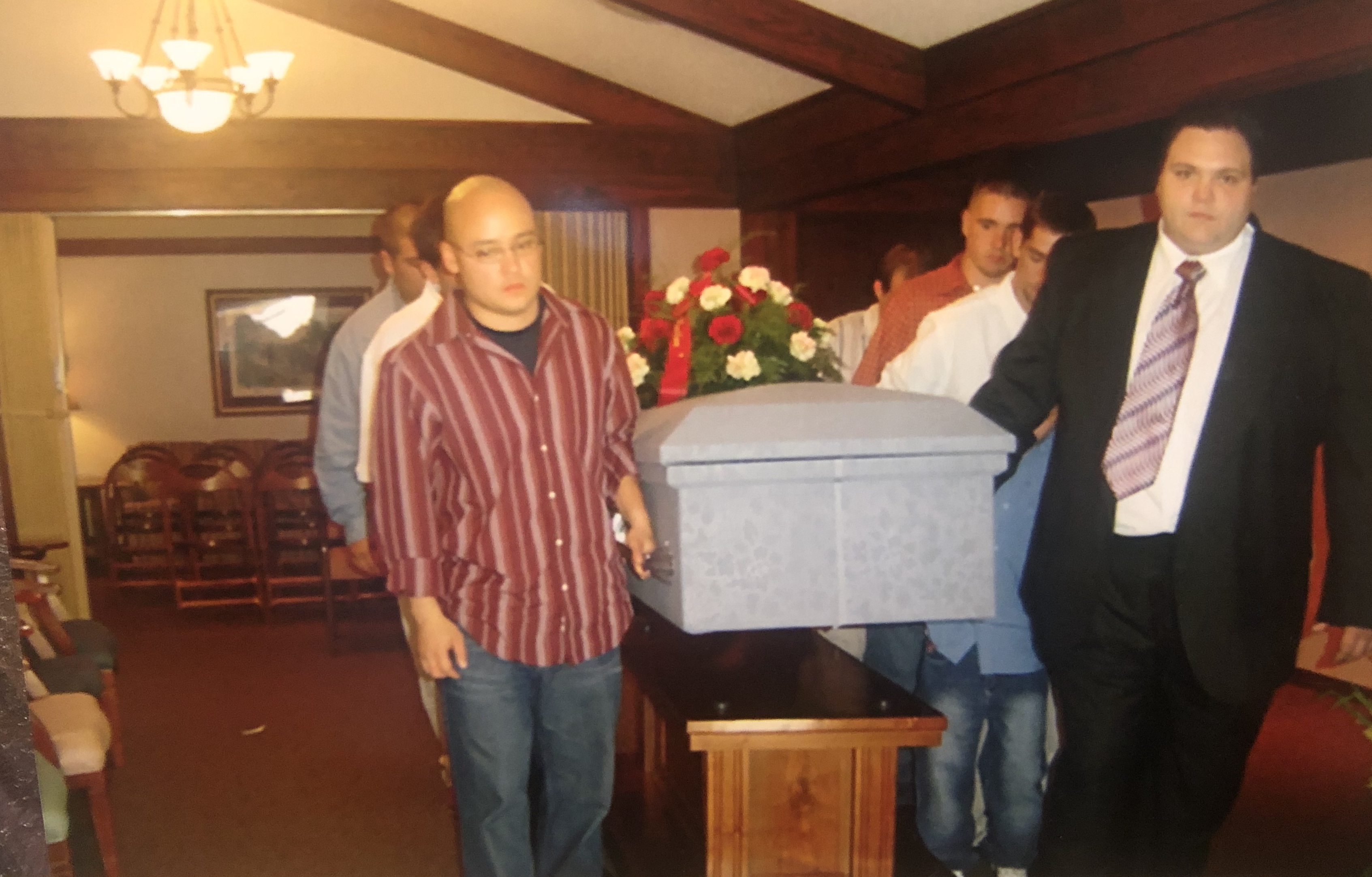
The night I found my father’s certificate was significant because up until that time, I was told that he died from alcoholism. This was only partly true. If you’ve read my other entries, you’ll know that he actually died from a mixed drug intoxication of heroin and fentanyl, a common pain medication used for cancer patients. This was incredibly disheartening for me. I learned of his destitute childhood and began to piece together the psychological implications and how that lead to habitual (sometimes illegal) recreation and addiction. I became extremely interested in my father’s death from a behavioral standpoint and how it could have been prevented. It began with a fatherless, destitute, and unsafe home. 75 percent of adolescent patients in substance abuse centers (4) come from fatherless homes, which gives us insight into its impact. My father needed someone to look out for him, and to recognize that he was close to hepatic failure; he needed a physician’s education, care, and intervention. The amount of pain that I felt growing up is indescribable, and as I continue to grow, the need for my father intensifies. Following this discovery, I decided I wanted to do everything in my power to prevent fatherlessness in whatever community I was a part of. Children need their fathers, and there is significant empirical evidence supporting this presumption (1-3). For example(4),
- 63% of youth suicides are from fatherless homes.
- 90% of all homeless and runaway youths are from fatherless homes.
- 85% of children who exhibit behavioral disorders are from fatherless homes.
- 71% of high school dropouts are from fatherless homes.
- 70% of youths in State institutions are from fatherless homes.
- 75% of adolescent patients in substance abuse centers are from fatherless homes.
- 85% of rapists motivated by displaced anger are from fatherless homes.
Treating fatherlessness is treating the upstream factor of many of society’s issues. Of course, I cannot solve all the ways a father may leave his home; however, I can be one part of the solution : alleviating pain through the preservation of life. It is further fulfilling to do so through medicine, giving back to society what they gave me — passionate physicians. It was the ultimate calling that would only be challenged once.
2. Vocational ministry
In high school, my church home, Southeast Christian Church (SECC) would take annual one week trips to Florida for worship, sermons, and small group discussions (see here for more info). These trips were extremely powerful because of the complete immersion in Christ away from home and other distractions while surrounded by new and growing Christians. In collaboration with Christ in Youth (CIY), the two ministries would do a phenomenal job hosting creative events that allowed students to step into a decision about surrendering their lives to Christ: for the first time or rededication, and to each other.


As you might imagine, these trips were rather life changing; at the end of the week, hundreds of high school students would make the decision to be baptized in the ocean. One of the most important things that I learned, more than anything, was the need for community. Without that, it’s hard to follow Jesus (see here). Every year there is a sermon that speaks to students who are considering full time ministry. (I would discourage underclassmen/new Christians from making this decision, unless you’ve been following Jesus closely for quite some time). For many of the upperclassmen, this was a serious consideration as most of us were applying to undergraduate universities. For me, I was absolutely torn between going into full time ministry and becoming a physician. The church adopted me and changed my life; I had gone on mission trips and visited church plants nationally that further perpetuated this desire. I didn’t know if I was making plans based off my desires only, with no regard to what God was calling me to, or if he had given me these passions and experiences to prepare me for medicine. I knew that I wanted to work closely with the church, but I didn’t know what part of the body God wanted me to be (1 Corinthians 12). It didn’t help that one of my favorite pastors, now Lead Team Pastor Matt Reagan, at one point considered becoming a physician — and now was one of the most influential pastors for the church and well known by every student. Ultimately, through prayer and shadowing physicians in high school, I felt that God was calling me to the ministry of medicine, beyond a reasonable doubt. It was important to recognize that all Christians were being called to Love Where They Are, and that I could be in ministry and medicine, and love others through extraordinary care with the wisdom and passion that God [will] blesses me with. Medicine, then, became something much bigger — it was about connecting people to Jesus and serving him, and it changed everything.
Post Secondary
3. Joining the United States Army
My senior year of high school, one of my best friends and I thought it would be fun to take the ASVAB, because it was free, neither of us would ever consider joining the military, and we simply wanted to test our competitiveness. Shortly after this exam, my mom began receiving calls from the local recruiter. Whenever she brought it up, I disregarded it with humor. My thought: the military is for stupid people who have nowhere to go. After further resiliency by the sergeant, my mom encouraged me to talk to him in person to tell him no. With a little bit of an ego, telling him no was something I looked forward to…
February 2, 2016, I walked out of the recruiting office having signed initial paperwork to enlist. Having grown up without a father, something about the Army, the ‘manliness’ required for it, drew me in. I was raised by two females, and this was something refreshing.
Being that it was still the beginning of my second semester senior year of high school, I still hadn’t received financial aid offers from any universities. In addition, there was a 50% chance that I was going to accrue $80,000 in debt to attend Indiana University — I just didn’t know at that time what my offers would be. So without knowledge of this, I enlisted when I was seventeen with the hopes of the Army helping me pay for school. The recruiter knew just what to say to let me seriously consider this, and I made the hardest decision that month: do I take a gap year? I was so excited to start my journey toward becoming a doctor, but now something had gotten in the way of that. After reading tons of forums, I was convinced that it was okay to reach my goals at my own pace, and decided to take a gap year. This turned out to be one of the best decisions I’ve ever made.
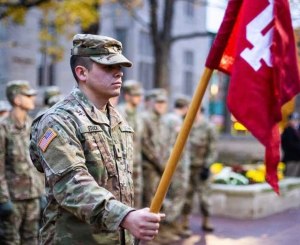
During my gap year, I was in active duty training for 9 months. Due to logistical issues and maybe a few white lies, I enlisted in the Army as a ‘culinary specialist’, a cook. This was considered one of the lowest jobs in the military, and even though I qualified to enlist into any job I wanted to, this was a slot that was available at a unit that was near a college at which I thought I would swim (unfortunately I didn’t get accepted). Most people that become cooks in the Army do it because (1) they enjoy the culinary arts and hope to advance their career, or (2) it’s an entry level job a low ASVAB score will allow you to enter. So during my gap year, I went from being surrounded by cut throat honors students, to individuals who came from disadvantaged, broken homes. This was extremely hard for me — I missed the academic environment. However, it was also one of the greatest experiences of my life, that allowed me to create lifelong friendships and learn to work with a diverse group of people. It reassured me that I wanted to be in an academic setting for the rest of my life, and that school was a lifestyle for me. Education was such a blessing, and I was thankful enough to come from a High School that gave me so many opportunities. In addition, it showed me that I had the ability to be a part of two extremely different communities. My love for my country grew and I didn’t want to miss out on being part of the greatest military in the world, with such rich history, camaraderie, and culture. Not only would medicine allow me to provide and preserve the lives of the friends and family that I had come to love, but I would be contributing to the effort of keeping America strong and preserving the American way of life — the life that America is allowing me to pursue. It was another way that I could give back to my community, and in doing so, I knew that some of my patients would be good family men, whose families would be depending on me to provide the finest care…to prevent fatherlessness. The ministry of medicine within the military became the biggest honor and privilege that I could pursue. It is something that I absolutely have to do. As a result I joined Army ROTC at Indiana University to learn about and become part of the population that I wanted to serve. “Inhale — exhale; soldier — doctor; war — medicine(5).”


The pursuit of military medicine
With an interest in military medicine, I connected with the senior medical officer at Air National Guard, 123rd Medical Group located in Louisville, Kentucky. One of the most inspiring physicians I had the privilege of shadowing, asked me about my life. This wasn’t common from the past physicians I had followed, and it meant a lot to me; she took a keen interest in my desire to go into medicine, and how I was making that goal come true. This led to the discussion of my father, and she recalled doing medical examinations for accidental overdoses in 2005, and mentioned that she may have been my father’s medical examiner. That weekend, after reviewing some paperwork, I learned that one of my favorite physicians performed my father’s autopsy. The ministry of military medicine was never more clear than in that moment; I was exactly where God wanted me to be. I later shadowed her at her office, becoming exposed to three autopsies and gaining closure about my father. I received his full autopsy report, and made a promise to myself that one day I would understand the whole document. My father was a healthy man, and died peacefully, without pain, from an accidental mixed drug intoxication.

I became a Military Medicine Ambassador in collaboration with the Uniformed Services University, my first choice. Our mission is to make known and communicate the opportunities available to practice medicine as a uniformed physician, in support of the ultimate goal that every individual with a propensity for service as a uniformed medical officer is aware of their opportunities (USU, HPSP, etc). After attending an open house in Bethesda, MD and hearing the passion in the stories of previously deployed physicians, it became apparent to me that this is what I needed to do. I adopted a motto(6) by a Surgical/Shock trauma platoon in Camp Taqaddum (Iraq 2005): Pro Vita Batuimus which in Latin translates to “For life, we fight.”
“Consider it pure joy, my brothers and sisters, whenever you face trials of many kinds, because you know that the testing of your faith produces perseverance.” James 1
References
- Flood, Michael. 2003. “Fatherhood and Fatherlessness,” Discussion Paper No. 59, , November. https://eprints.qut.edu.au/103402/.
- Amato, Paul R. 2001. “Children of Divorce in the 1990s: An Update of the Amato and Keith (1991) Meta-Analysis.” Journal of Family Psychology: JFP: Journal of the Division of Family Psychology of the American Psychological Association 15 (3): 355–70.
- McLanahan, Sara, Laura Tach, and Daniel Schneider. 2013. “The Causal Effects of Father Absence.” Annual Review of Sociology 39 (July): 399–427.
- U.S. Department of Justice. 1998. “What Can the Federal Government Do To Decrease Crime and Revitalize Communities?” Panel Papers. https://www.ncjrs.gov/pdffiles/172210.pdf.
- Kerstetter, Jon. Crossings: A Doctor-Soldier’s Story, First edition (New York: Crown, 2017),
- Navy Medicine. 2006. United States. Naval Medical Command.; United States. Navy. Medical Department.; United States. Department of the Navy. Bureau of Medicine and Surgery. NAVMEDP, 508.
Acknowledgements. Thank you for your unwavering support: Michael Cooper, Colonel, M.D. ; Donna Stewart, LTC, M.D.; and Robert Liotta, CDR, M.D. and for developing my interest in military medicine. Thank you Franco Pestilli for allowing me to develop as a scientist at Indiana University. Special thanks to my dear friend, Camryn Jansen, for unconditional support during my undergraduate years, and edition of this publication.

 For the Love of Medmilmin
Loved reading your story and your journey! So proud of you and your positive look on life. Your story is so inspirational!
LikeLike