


This winter break, I had the opportunity to travel to Cuba with the University of South Carolina as a Filter of Hope Ambassador. This has been without a doubt a very impactful and rich learning experience spiritually and academically. If you ever get the chance to travel to a foreign country with ~40 strangers, I highly recommend it. This entry has many different parts to it, please feel free to skip certain parts depending on the amount of detail you want to learn! Thank you so much for taking the time to read about the wonderful people of Cuba and what God is doing there.
Filter of Hope (FOH) Introduction
Filter of Hope is a 501c3 non-profit organization based in Tuscaloosa, AL. Their mission is to provide clean drinking water and share God’s love to families in need around the world; their vision is to help families break the cycle of poverty by giving them access to clean drinking water and providing opportunities for education and jobs. Most importantly, they have a passion of giving people hope through Jesus Christ, the Living Water. They do this biblically by visiting communities as an extension of the local church, empowering families, and having them invest in their own health by using their own buckets. To read more about Filter of Hope, please visit here.
Fundraising
I cannot thank enough the friends, family, and professors/teachers who have supported my mission. With their generosity, FOH was able to distribute 105 filters to families living in poverty. The life changing experiences for the families, students, and myself would not be possible without their support.
My Background
The spring of my sophomore year, I traveled with IU/Purdue/Alabama Cru to Guatemala in collaboration with FOH. I traveled with other Christians who had followed Jesus closely for some time and shared the gospel while installing filters. I had gotten to know many of the students throughout the semester within the ministry and during the trip. You can read more about that trip here.
At the end of the 2019 Spring semester, I felt called to turn down my desire to travel abroad through premed organizations and invest my time and resources into FOH’s mission instead. A couple of my friends and myself ran FOH’s first annual virtual 6k in the Spring. I still felt called to do more, and found out about FOH’s Ambassador program online.

Preparation for Cuba
God’s calling for me to do this was unquestionable. In just 13 weeks, I was able to raise enough money that would provide 105 filters to families in any part of the country. I prayed that this experience would bring me out of my comfort zone, and for that reason I chose not to go on a trip with the Cru ministry at IU. I was extremely excited to meet new students from any part of the US, and my luck landed with USC. At first, I was worried because after scrolling through some of the student’s GroupMe pictures, I saw a student wearing a hat with big red letters “COCKS.” After further research, I realized that USC wasn’t “University of Southern California,” and that the Gamecocks were the mascot of the University of South Carolina.


During my fundraising, I received some pushback from potential donors. For the first time, my belief that mission work is inherently good was challenged. I got asked questions that I didn’t know how to answer — I had a gap in knowledge. For this reason, I decided to begin reading a book that was recommended to me by my youth pastor, When Helping Hurts by Steve Corbett. This book describes the foundational concepts, principles, and strategies of defining and helping the poor within biblical parameters. After the first chapter, I was extremely convicted of the way I viewed the poor, and this trip revealed to me just how much richer they are than us in many ways. I am extremely grateful for the Christians and non-Christians who challenged my way of thinking instead of donating during my fund-raising phase; in doing so, they helped prepare my heart and mind as a lifelong Christian and FOH Ambassador. I highly recommend reading this book before donating to any other cause or doing missionary work, ever.
Arriving in Cuba
Seamless logistics. The first day with the students of USC, I had learned that they had been recruited from Pi Kappa Psi fraternity and Tri-Delta sorority at USC. I had also learned they were not affiliated with a campus ministry. I was immediately skeptical and confused in the strategy of FOH.
I asked the country coordinator to help me understand. I learned that while FOH was going to rely heavily on the Ambassadors, staff, and translators to share the gospel with the families in the beginning of the week, this mission trip wasn’t just for the families — it was also for the students. This was insane to me. In high school when I came to know Christ, it was through pastors sharing the gospel with me, not me sharing the gospel with other people. I didn’t share the gospel until 3 years after I became a Christian, and I could only imagine the stress that these students would go through, to share the good news with others, that perhaps they themselves needed to hear. How does one do that? I didn’t believe it would be too effective.
Later that night, I randomly flipped open my Bible and came across Ephesians 3, Paul stating, “Although I am less than the least of all the Lord’s people, this grace was given to me: to preach to the Gentiles the boundless riches of Christ, and to make plain to everyone the administration of this mystery, which for ages past was kept hidden in God, who created all things.” I was convicted of doubting God’s ability to bring the gospel to His people, and mistrust of the Holy Spirit’s power. For the rest of the week, I believed that God had something much bigger in mind, and I felt at peace that “He is able to do immeasurably more than all we ask or imagine.”
Palenque


In 2005, it would have been impossible for missionaries to be in Palenque, the village we served, due to its danger. In 2006, a church consisting of 35 Cuban Christians began “praying for angels” to be sent to their community. In 2016, FOH was established in Cuba.
Poverty in this village is multifaceted, just as poverty is in most families across the world. Numerous Cuban families that we interacted with were practitioners of Santería, an Afro-American religion of Yoruba origin, which is easily identifiable by clothing and physical idols. During my preparation for Cuba, I learned that the economic, social, political, and religion system encompasses our relationships with ourselves, others, and the rest of creation — then there is our relationship with God over everything. When interacting with the families of Palenque, staff, and translators, I tried my best to understand how their poverty was rooted in broken relationships and how Jesus’ resurrection could restore people to the full expression of their humanness. I learned the rich village history of Santeria: consisting of human sacrifice and murder, which placed fear into law enforcement, and caused the government to abandoned them. Further, there is migration from the East, in search of a better life and work, much like people migrate to New York to find the “American dream.” Since these families have nothing, they are further marginalized by their own people. The government and economic system are in turmoil. A pair of jeans costs 2 months rent; the water filters that we provide, would costs 3 months rent. Most homes can have up to 4-5 families living in them, with most of their salary going towards food. Almost all children go to school without eating breakfast. Healthcare and education are among the services that are free, yet there is still great poverty. It is overwhelming. Fascinating. Confusing. Disheartening. Like our country. Not like our country.
“How Havana is broadcasted is nothing how Havana is, it’s a lie.” – Reporter, FOH translator

God has been working in Palenque for the last 15 years, and my team had the opportunity to be part of what is already doing in Cuba; however, there is still much to be done. There is imprisonment history and persecution that still avert people’s desire to follow Jesus. I can only share my understanding of what was shared with me, what I heard when interacting the families, and admit that there are large gaps in my comprehension of all the systematic causes of poverty in Cuba. When I went into homes, I saw the effect of broken relationships with God, self, others, and the rest of creation. One translator, stated “It is only — only — by the grace of God, that we have been able to survive.”
Sustainability, Ministry, and Preventive Medicine
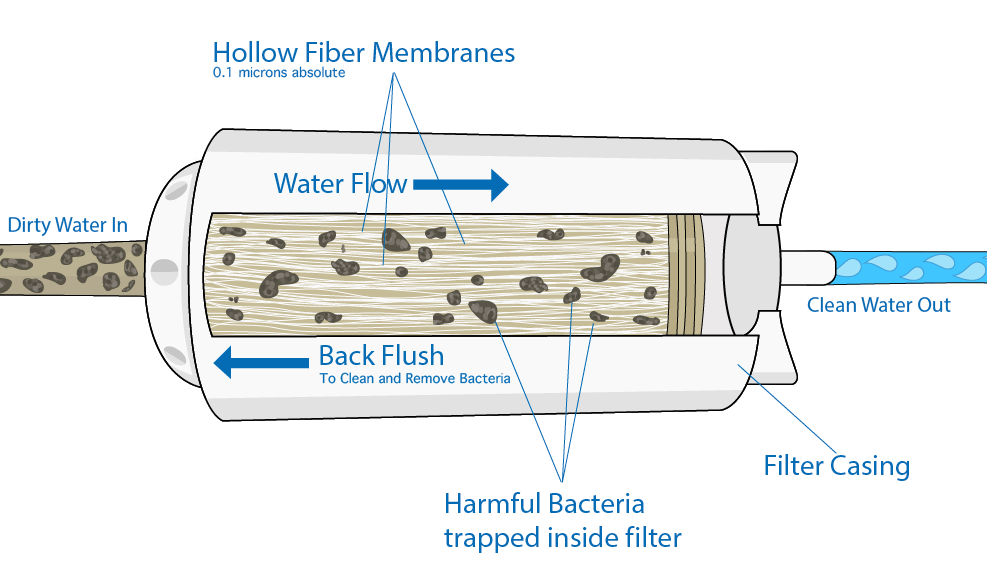
Part of my learning experience in Cuba was to understand more about FOH from the volunteers and staff. I wanted to know if they perceived their work as impactful, biblical, and helpful in a way that didn’t hurt the communities in the process. One important concept I learned from a staff member: sustainability. In case you didn’t know, FOH’s filters can clean ~150 gallons/day for 10 years. This provides so many opportunities for the families to go to school, find jobs, and invest in their future. Why not teach Cuban engineers how to make these filters instead? There are production, tarrif, and shipping costs to consider, which may not be sustainable for Cuba; further, the filters provide an opportunity to build relationships with these families, and that is extremely important. Our relations with others are also a determinant of health! This isn’t just meeting a physical need, but a spiritual need. God is the Creator and Sustainer of the laws that make the dialysis technology work, and it is our prayer that each time these families members use these filters, that they remember the story of Jesus. That they remember “whoever drinks this water will be thirsty again, but whoever drinks the water [Jesus] give[s] them will never thirst…the water [He] give[s] them will become in them a spring of water welling up to eternal life. (John 4)”
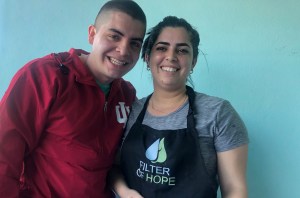
FOH provides the best locals to serve their missionaries in Cuba. In fact, I was so astonished by the pure joy in one of the servers that I had to ask her why she was so happy to serve us. Her answer was, “I just love serving people and God, and that is why I am studying to become a doctor.” In Cuba, medical school is 6 years long. I couldn’t believe that a 5th year medical student was taking her time during her winter vacation to cook, serve, and clean after a group of 50 adults three times a day. This touched me as an aspiration physician, and I had to hear more. I learned from her that there are no extra incentives to practicing medicine in Cuba; unlike in America, where physicians are paid more and (may) have nice benefits. Furthermore, Cuba lacks many of the resources and supplies to care for patients within the standard of care, therefore many of the physicians are forced to improvise with secondary and tertiary medical plans. Why do the filters play a part in medicine? There is infection everywhere in Cuba, and Cuba doesn’t allow outside medical supplies into the country. Even when families boil their water, it still contains contaminated metals that can cause kidney complications. I saw infection first hand in one of the families we visited: a grandmother with a decaying leg. More than that, I remember her tears as we drilled a hole into one her buckets that will provide clean water. These filters prevent infection, and prevent the need for medicine in a country that cannot provide them with the standard of care. Therefore, these filters may be the most effective way to care for Cuban’s health. Diana is doing great things, even as far as sharing the gospel with dying patients. These filters are doing so much more than alleviating poverty, providing the opportunity for jobs, education, investment…they are actively reducing suffering in the form of medicine.
The Gospel is Alive
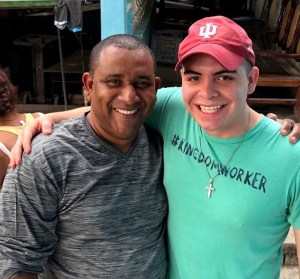
The head pastor of the local church, Jose Louis, used to be a Santerían Lord, earning the nickname “The Satanist.” He was a very dangerous man before he got sick, and met Jesus through a friend who discipled him. Filter of Hope is special in that they serve communities through the local church. We do not go as Americans, and we go to simply love on these families; this is placing our lives in service to the community. It was even more special to do this under Pastor Jose Louis’ guidance…a man who once practiced witchcraft and idol worship like some of the families, and was a master and influencer of it.
Before and during this trip, I underestimated what God is able to do with so little; I underestimated what He can do through people. The filter, in conjugation with obvious Americans, provide the opportunity for the church to “get our foot in the door” of these homes. Many of these families are so welcoming to Americans, and they want to learn from us, just as much as we want to learn from them. Being welcomed into their homes is such a special moment, with so much hospitality and love for human connection. God can do so much with just $40, with just one filter, and his Holy Spirit. Here are some stories I or my team encountered.
Just a few stories
- Imagine a man walks up to you and a couple of your friends. You had never heard much of God, but when you do, you hear the message from a man claiming to be a Chrisitian. This man gives you a USB drive, and you and your friends listen and believe what is on it. The files on the USB drive preach that whenever you pray to God, whenever you ask for anything, that He will give us the exact opposite. For example, if you ask for good health, God will give you sickness. This was the case for 3 ladies our team encountered. This is incredibly disheartening, because they were so afraid to pray to God, to ask him for anything, because of what this “Christian” had told them. These three women heard the truth of Matthew 21:22, and they learned of a God that loves them dearly. On this day, Jesus healed their blindness from a lie and they accepted Jesus into their lives.
- Ermilda couldn’t receive a filter the day before my team walked into her house. That day we installed a filter into her house, and she told us after hearing the gospel the day before, that she woke up that morning with so much joy and a changed heart. She wanted to know more about Jesus, and we prayed for her faith and welcomed her into our eternal family. She cried with so much joy and thankfulness.
- A woman with a child less than a month old, will be able to bathe her baby in clean water, and she is so joyful for this news.

- Maeila is a grandmother whose daughter of three died. She is a Christian who takes care of all those children, and runs a very large farm alone. We pray for her, and she is thankful for other Christians to come along side of her, to remind her of God’s strength, His love, and blessings that come from suffering.
- Marta, a mother who had recently lost her brother, is taking steps toward knowing Jesus and wanting to follow him and give up her idols. She expresses that she sees the truth of John 13:35; that the love between the members of our team and church greatly surpasses that of those who worship idols. She wants to be part of a family that shows that kind of love to each other. We believe Marta will be very influential in her faith in the days to come.
- A man who has never heard of Jesus received prayer from our team. He was so appreciative of the prayer and expressed that this was the most impactful thing that has happened to him. Some people are very lonely and have nobody, and we are able to welcome them into our eternal family. People in Cuba are still waiting to hear the gospel for the first time!


- College students, who had never heard the gospel communicated through the symbolism of a filter, or grew up in church that focused on traditions rather than Jesus, hear their peers/translators share their testimonies and the gospel. They witness intimacy, passion, and love poured out to these families that it touches them in a way the church has never touched them before. It touches them so much that people who have never shared their faith, or never expected to during this trip, start sharing the truth of Jesus and His love for us. They completely come out of their comfort zone, and do it with joy. They experience the power of the Holy Spirit, words and ideas flowing out of their mouth that they couldn’t have come up with themselves. God didn’t just impact these Cuban families, but he impacted students who were “supposed” to be the “missionaries.” College students are accepting Jesus into their lives, truly, for the first time.
- The Filter of Hope staff provided me the opportunity to share my testimony with my beloved new group of ~40 friends. For the first time, I was able to share parts of my life that I am unable to reveal online, and share the deep love of Jesus that is unexplainable and overwhelming. That night, the staff and the University of South Carolina prayed for my career and launched me into my ministry — the first time in my life. My body was trembling. These prayers were so powerful and so loving; More than 10 students came forward to me to profess the power and reality of Jesus’ love, an “unexplainable power … unspeakable connection.”
150 filters were distributed, and 55 people accepted Christ
I wish I could share more stories with you; ~35 other students from USC experienced very impactful moments with families, I unfortunately couldn’t capture every story. Those aforementioned are just a glimpse of what happened in only one week. For the families we visited: 150 filters were distributed, and 55 people accepted Christ into their lives in just 4 days.


Conclusion
Whether or not we believe in Christ, we cannot deny that the story of Christ is bringing hope, joy, and health to families across the world. God doesn’t need us, but has allowed us to be part of His plan. It is your choice whether you want to be a part of what He is doing. I believe in my heart that Filter of Hope is proving biblical love and care for communities in many ways that countless organizations are not. We plant the seed of Christ in their hearts and in their minds, and the local church continues to disciple, love, and empower these families right where they are at. I would strongly encourage you to read When Helping Hurts, to become convicted on our view of poverty and how you can help. The goal is to glorify God, and not just increase people’s incomes. God will do his work with or without us; whether we know Him or we don’t, Jesus will use the least of these: Jesus can even use those who don’t know him to reach the broken! It is not up to us to decide what God can do with a simple filter or who He shares His love through. He will do anything to chase down the ones He loves, He will fight until they are found. I pray that you find your place in His story, and that in Heaven, you can see the fruits of your labor: meeting members of your eternal family from every nation, tribe and tongue.
Acknowledgements
Thank you CEO, Bart Smelley for your personal support and obedience to Christ. Thank you Morgan Bryant, for your guidance and leadership in Cuba. Cuba locals, translators, staff, and volunteers for patience, understanding, and desire to share the complexities of Cuban life and your testimonies. Thank you USC and other missionaries for your overwhelming love, friendship, kindness, Pi Kappa Phi t-shirt, and captured photos. And finally our donors, who’s heart for Jesus perpetuate life change.


In Christ,
Ricardo

 For the Love of Medmilmin
1 Comment